
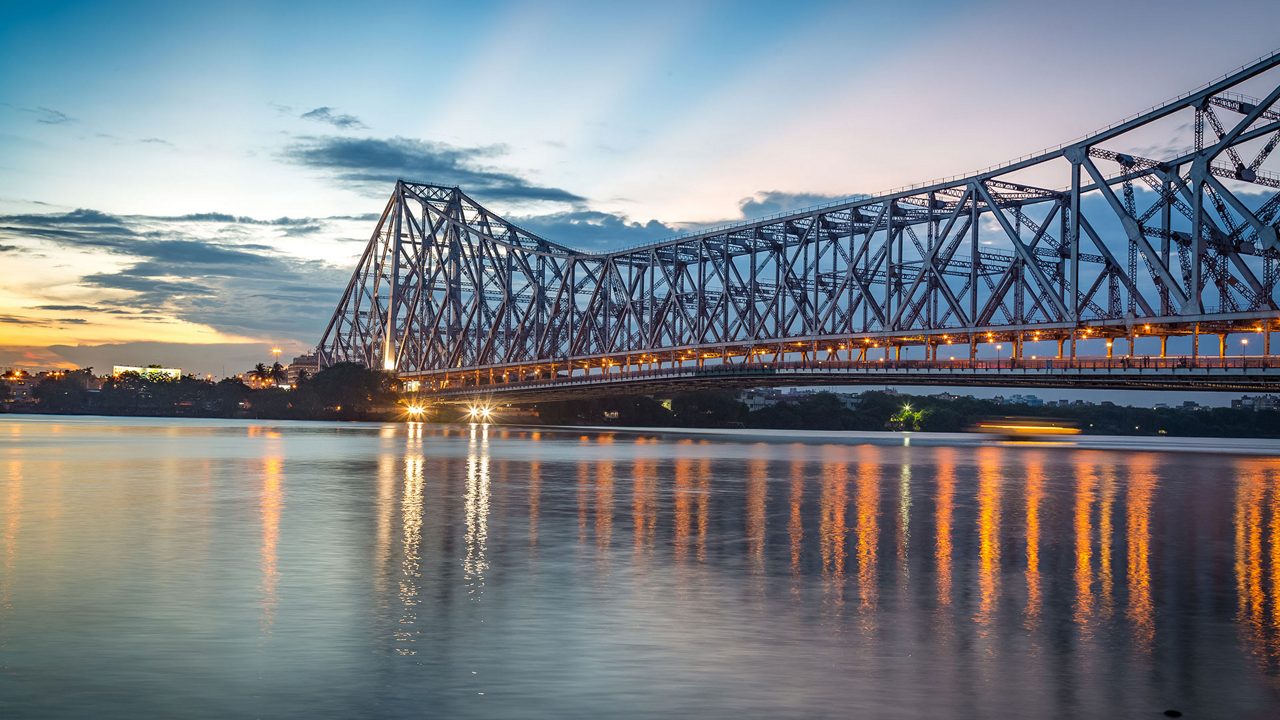
HOWRAH BRIDGE
GATE WAY OF KOLKATA
When we think of Kolkata, one of the first landmarks that comes to mind is the iconic Howrah Bridge, gracefully spanning across the Hooghly River. Connecting Kolkata and Howrah, the bridge stands as a timeless symbol of the city’s energy, heritage, and engineering excellence.
Completed in 1943, Howrah Bridge - officially known as Rabindra Setu is one of the busiest cantilever bridges in the world and continues to serve millions of commuters every day.
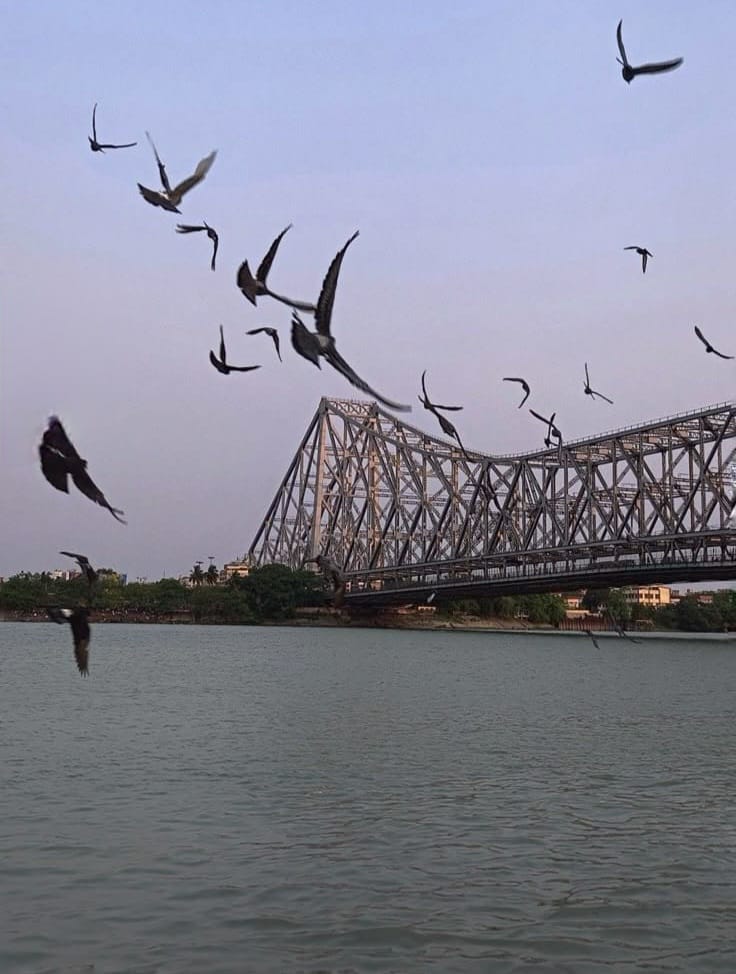
architectural brilliance
A masterpiece of engineering, Howrah Bridge was constructed entirely from steel using riveted connections without traditional nuts and bolts. Its enormous cantilever structure stretches across the Hooghly River without any supporting pillars in the water. The bridge showcases remarkable industrial architecture and remains one of India's greatest engineering achievements.
CULTURE & CITY LIFE
Howrah Bridge is deeply woven into the cultural identity of Kolkata. From bustling daily commuters and vibrant flower markets to evening city lights reflecting on the river, the heartbeat of the city. It has appeared in numerous films, photographs, artworks, and literary works representing the spirit of kolkata.
HISTORICAL SIGNIFICANCE
Constructed during the British colonial period, Howrah Bridge played a crucial role in improving transportation and trade between Kolkata and Howrah. It became an essential lifeline for commerce, travel, and urban development. Even after decades of continuous use, the bridge remains one of the most significant landmarks in India's urban history.
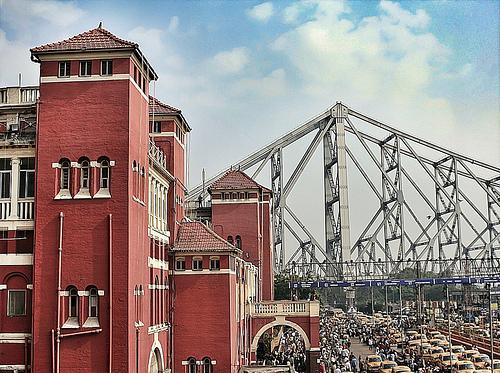
A SYMOBOL OF STRENGTH & HERITAGE
The surroundings of Howrah Bridge offer an authentic glimpse into Kolkata's vibrant atmosphere. Visitors can witness the famous Mullick Ghat Flower Market, riverside ghats, and ferries crossing the Hooghly, and panoramic city views.
At night, the illuminated steel framework creates a breathtaking sight against the skyline, making the bridge one of Kolkata's most photographical landmark.